Kiefer Smith
Junior Game Designer

Role: Solo Developer
Fractured Illusions is a first-person psychological horror game developed in Unreal Engine 4 as my final-year university project. Over the course of a year, I independently designed, built, and refined the game from concept through to a playable release, combining atmospheric exploration, environmental storytelling, puzzles, and suspense-driven gameplay.
As the Solo Developer, I was responsible for every aspect of development including game design, level design, gameplay programming using Blueprints, environment creation, UI, lighting, audio implementation, testing, and project management. This allowed me to experience the complete production pipeline of developing a commercial-style game.
The project strengthened my skills in Unreal Engine, iterative level design, environmental storytelling, and player guidance while teaching me how to scope and manage a long-term solo development project from initial planning through to completion.
Developing a complete horror game as a solo developer over the course of a year presented challenges in balancing scope, atmosphere, gameplay mechanics, and technical implementation. The project required careful planning to ensure the environment remained immersive while still clearly guiding players through objectives and puzzles without relying on excessive UI elements.
My approach focused on environmental storytelling, lighting, and level layout to naturally guide players through the hospital. Puzzle progression was carefully integrated into exploration, while visual cues such as lighting, blood trails, and environmental details encouraged players to investigate their surroundings without breaking immersion.
Development began with a simple greybox layout used to test player flow before building the final environment. Through repeated playtesting I refined room layouts, adjusted sightlines and improved navigation to make exploration feel more natural. Following player feedback, I introduced several visual guidance techniques including illuminated switches, blood footprints leading towards objectives and environmental lighting that subtly directed players without relying on interface markers. These changes significantly improved readability while maintaining the horror atmosphere.
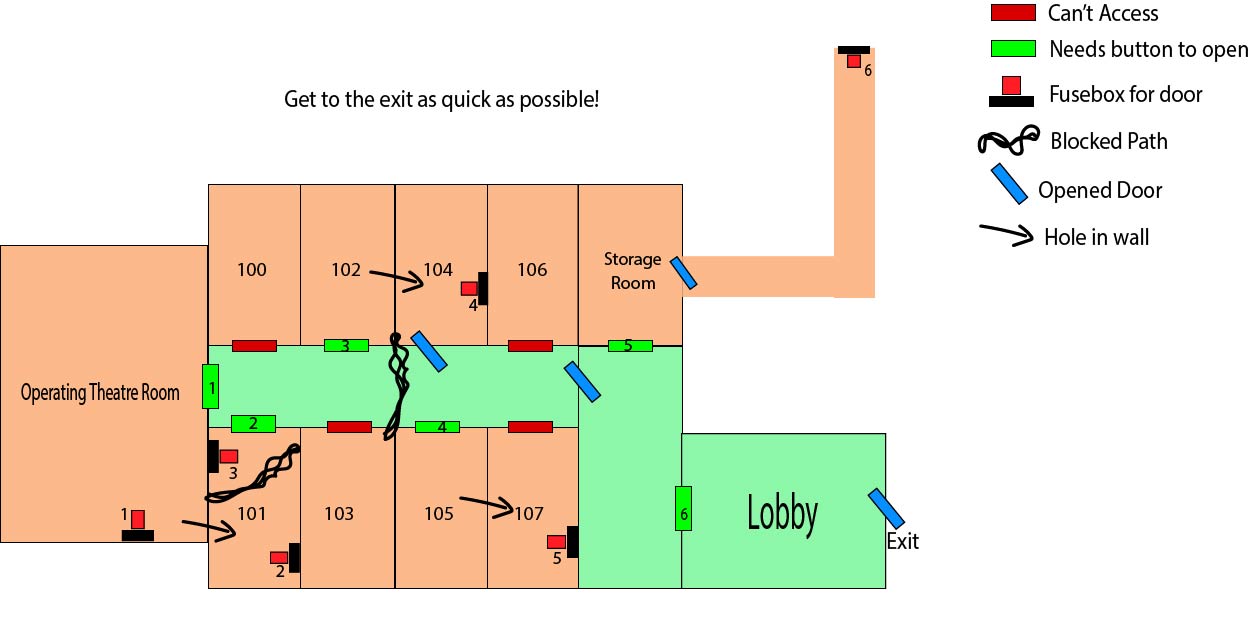
Regular playtesting informed improvements to puzzle readability, navigation, jumpscare placement, and environmental storytelling. Feedback from testers helped refine pacing, ensuring moments of tension were balanced with exploration while maintaining a clear sense of progression throughout the experience.
Fractured Illusions became the largest and most ambitious project I had developed at the time, successfully demonstrating my ability to independently design, develop and complete a full game over a year-long production cycle. While some planned features—including additional hospital floors and collectible story elements—were reduced to meet deadlines, the project significantly strengthened my skills in level design, Blueprint scripting, environmental storytelling and project management. The project remains one of my favourite pieces of work and I intend to revisit it in the future with expanded mechanics, larger environments and a more complete narrative experience.
Additional materials related to the project, including the original design document and a playable build.